Assess chances

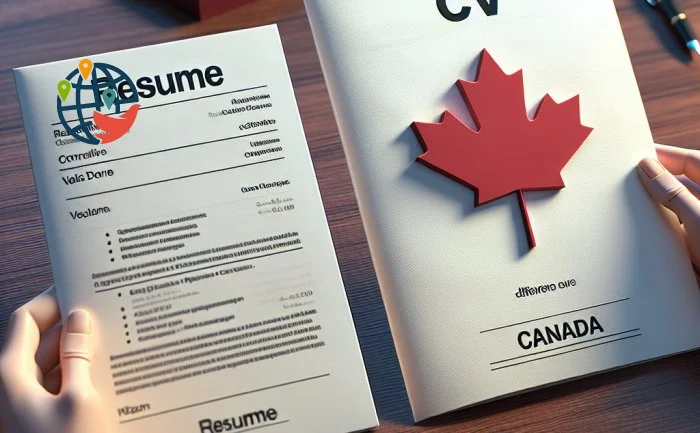
What is the difference between a resume and a CV in Canada?

What is the difference between a resume and a CV in Canada?

On the one hand, these documents are similar, but on the other hand, they're quite different.

Job hunting in Canada inevitably involves preparing several documents. Among these are a resume or CV. Many mistakenly believe these are the same thing, and in European countries, resume and CV are indeed interchangeable terms. But not in Canada.

In North America, resumes and CVs are different documents, although both can be used for job searching. Understanding this difference is crucial for successful employment in 2025.

Resume

A resume is a brief description of key professional experience. It allows employers or recruiters to quickly assess a candidate's experience and skills.

Resume characteristics:

  • Used for job applications in most fields;
  • Ideally one page long and should never exceed two pages;
  • Contains a brief description of your key skills and professional achievements, which are emphasized;
  • Lists only education, skills, and experience relevant to the position you're applying for;
  • Usually accompanied by a cover letter, where you can elaborate on yourself and why you're interested in the specific job;
  • According to official Job Bank Canada 2025 recommendations, each resume should be tailored to a specific job using keywords from the job posting.

CV

Curriculum vitae, or CV for short, may be required when applying for positions such as teacher, professor, researcher, and the like, as well as for grant applications, scholarships, educational programs, and research opportunities. The CV format differs significantly from a resume, although these documents have some similarities.

CV characteristics:

  • Used in academic and scientific fields;
  • Usually 2-5 pages long, but there are no restrictions, and it can be longer;
  • Provides detailed information about all professional achievements;
  • Contains all work and volunteer experience, as well as information about education, research conducted, dissertations written, publications, presentations, professional association memberships, grants won, awards received, and so on.

Types of Resumes and CVs

As mentioned earlier, resumes and CVs have some similarities. For example, each of these documents can be chronological, functional, or targeted:

  • A chronological resume or CV reflects all or most of your skills and achievements, listed in chronological order, starting with the most recent.
  • A functional resume or CV contains only your most important achievements and professional experience.
  • A targeted resume or CV means that all information in it is aimed at a specific employer or job opening.

Help with Resume or CV Preparation

Whether you need a resume or CV, there are many nuances that will help your application stand out in the job market. This is especially important if you're not yet in Canada and need to make every effort to get noticed by employers. In 2025, Canadian employers particularly value resumes adapted to local standards, including proper date formatting, use of the metric system, and Canadian spelling.

We offer professional resume or CV preparation that meets all Canadian standards.

Source, Source
  • #resume for Canada
  • #what is a CV
  • #how resume and CV differ
  • #differences between resume and CV
  • +