Nunavut - a cold and inaccessible territory
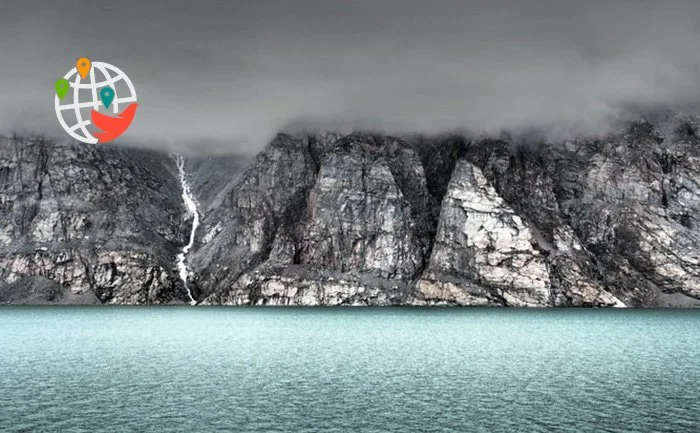
Nunavut is one of the coldest regions in Canada and the largest and northernmost of the Canadian territories.
In this article, we'll cover the following topics:
- geographical location;
- climate;
- where to live;
- crime;
- education;
- work and wages;
- prices and taxes;
- healthcare;
- population;
- what to see;
- immigration programs.
Nunavut, as a territorial unit of Canada, was established relatively recently — in 1999. On April 1st of that year, these lands officially separated from the Northwest Territories.
As the largest region in North America with an area of 2.093 million km² and a population of just over 40,000, Nunavut is one of the most remote and sparsely populated regions in the world.
Fun fact: If Nunavut were a sovereign state, it would rank 15th in land area after the Democratic Republic of Congo.
The capital of Nunavut is Iqaluit, located on Baffin Island. About 20% of the population lives here.

Climate
Nunavut is in the Arctic and Subarctic climate zones. This means it's very cold both in winter and summer. Average annual daytime temperatures range from -30°C (January) to 10°C (July). The further north you go, the colder it gets. On Baffin Island, where the capital is located, average temperatures are even lower.
Education
There's only one Arctic College here. According to recent data, it has 1,500 students. The maximum tuition fee is $2,307 CAD per semester and $6,489 CAD per year.
Healthcare
There aren't many large medical facilities in Nunavut. However, general healthcare is free here, as in most regions of Canada.
Canadian visa centers in Russia have stopped ...
The number of people wanting to join the Cana...
China offers Canada joint production of elect...
Trump stripped Canada of its seat on the pres...
Canadians rallied around Prime Minister Carne...
Arctic cold has covered Canada with temperatu...
Trump lashed out at Carney after his speech i...
Canadian companies plan to raise salaries by ...
Gold breaks records and continues to rise des...
Prime Minister Carney concludes a nine-day wo...
Cenovus Energy is preparing to sell assets in...
Carney in Davos declared the breakdown of the...
To receive medical services under the Nunavut Health Care Plan, you must have lived in the territory for at least 3 months and intend to stay for at least 1 year. The government program doesn't cover dental, cosmetic, or ophthalmology services.

Children in the province
Moving to Nunavut doesn't make much sense for families with children. First, there are very few kindergartens in the territory. Therefore, nannies are in high demand among the wealthy population.
In Nunavut, as in all of Canada, citizens and permanent residents under 20 are entitled to free education provided by the public education system until they finish high school.
Crime rate
Nunavut is notorious in Canada as the territory with the highest crime rate. This is due to both unemployment and the percentage of the population abusing alcohol and drugs. As of 2023, Nunavut continues to lead in the violent crime severity index, which is three times higher than the national level. These indicators put Nunavut in first or second place for the number of crimes committed in Canada.
Places to visit
Despite its harsh climate and remoteness, Nunavut is one of Canada's most striking tourist destinations. It has 13 parks, 4 protected rivers, and the Thelon Wildlife Sanctuary.
Overall, sport hunting and fishing are the most popular tourist activities in Nunavut. The area is also notable for its two hiking trails for tourists.

$$
Mentality
Given that 80% of Nunavut's population is Inuit, the province's mentality can be difficult for other ethnicities and nations to understand. This is also why the territory remains relatively closed off. There isn't a well-developed Russian-speaking community here.
The attitude towards non-native peoples in Nunavut isn't overly aggressive, but newcomers aren't particularly welcomed here.
Fun fact: The main language in this part of Canada is Inuktitut, the language of the indigenous Inuit people. Other official languages are English and French.
Special features
The main attractions of the province are tourism and traditional crafts. Given the ethnic Inuit majority living in this area, the latter can be very interesting for both tourists and Canadians exploring new horizons.
The unique local cuisine deserves a special mention. Despite its specificity, many may find it to their liking. However, you should be very careful with traditional Inuit cuisine, as some dishes can cause serious health problems for unprepared people if not tried in a restaurant setting.

The territorial parks Auyuittuq, Quttinirpaaq, and Sirmilik, as well as Ukkusiksalik National Park, deserve special attention.
Fun fact: Nunavut is unique in that it's the only area in Canada not connected to the rest of the country by any highways. The weather station known as Alert is the northernmost place on Earth, just 817.5 km from the North Pole.
Prices
Finding housing in Nunavut is quite difficult. According to the Mitula aggregator, average house rental prices as of January 2021 range from $817 to $1,539 CAD.
Due to the territory's remoteness and climate conditions, food prices are very high here.
Traditional regional foods like caribou meat and seafood remain cheap. However, common items like sugar, flour, and tea can be extremely expensive depending on how far the city is from the capital. For comparison, in 2020, you could buy one hamburger patty for $20 CAD and three bananas for $7 CAD.
There are no special pricing rules for food in northern regions, but they are partially subsidized under a federal government initiative.
Car rental starts from $7.99 CAD per day. However, roads only exist in major cities, so all-terrain vehicles are the most popular.
Taxes
Taxpayers in this part of Canada are very lucky — they only pay the federal GST, which is just 5%. For comparison, residents of Quebec pay almost 15%. In addition to GST, there's an income tax that depends on salary and is calculated as follows:
| Your Annual Income | Income Tax Rate |
| $45,414 CAD or less | 4% |
| $45,414 to $90,892 CAD | 7% |
| $90,892 to $147,667 CAD | 9% |
| $147,667 CAD and above | 11.5% |
Popular Professions
As of January 2021, the most in-demand professions are:
- Nurses
- Environmental and safety technicians
- College instructors
- Environmental engineers
The minimum hourly wage in Nunavut is $19 CAD as of January 1, 2024. This is the highest minimum wage in Canada. The territorial government regularly reviews this figure.
Currently, the territory of Nunavut does not have an immigration program.