Canadian Permanent Resident Card: obtaining process, rights and responsibilities of the holder
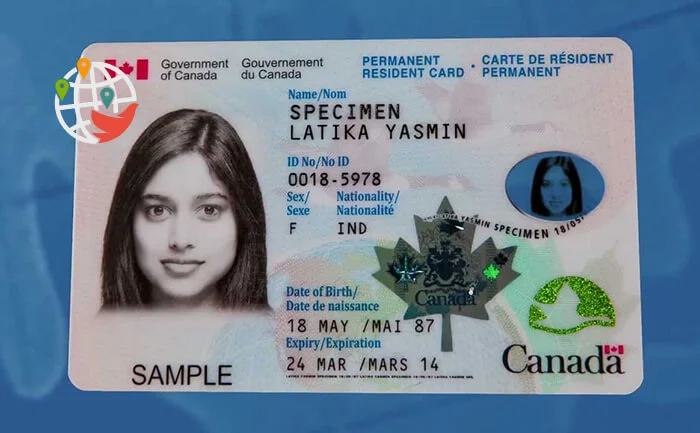
The Permanent Resident Card (PR card) is official proof of your immigration status in Canada. You need a PR card if you're a permanent resident planning to travel outside of Canada.
Photo: IRCC — Government of Canada
To be eligible for a PR card, you need to:
- be a permanent resident of Canada (immigrate), but not a citizen;
- have been physically present in Canada for at least 730 days in the past 5 years;
- not be under a removal order or convicted of an offense related to misuse of the PR card.
Rights of Permanent Residents
You can use your PR card as a form of ID, just like a Canadian driver's license, passport, or employee ID. It's also a way to prove your immigration status to Canadian authorities (such as provincial governments, schools, and employers).
As a permanent resident, you have the right to live, work, and study anywhere in Canada, access free healthcare, and enjoy other benefits.
Access Social Benefits
You're entitled to the same social benefits as Canadian citizens, including participation in the Canada Pension Plan.
Permanent residents can access universal healthcare from the day they arrive or after three months, depending on the province or territory. This covers essential medical expenses, including diagnostic procedures, emergency room visits, and some medications.
Work Anywhere in Canada
You and your spouse can live and work in any province or territory in Canada. Permanent residents aren't tied to a specific employer or province. If you start in Saskatoon but later find a better job in Vancouver, you're free to move. The only restriction is that you can't hold certain positions requiring high-level security clearance.
Study in Canada
Permanent residents under 18 are entitled to free education in Canadian public schools. For universities, tuition fees for permanent residents are significantly lower than for international students. For example, at the University of Toronto, the 2024-2025 tuition for a computer science program is about CAD 7,500 for first-year resident students, compared to over CAD 60,000 for international students.
Travel Visa-Free
As a permanent resident, you can travel within Canada and abroad. Some countries that offer visa-free entry to Canadian PR card holders include:
- Antigua and Barbuda (up to 30 days)
- Bahamas (30 days)
- Georgia (90 days)
- Dominican Republic (30 days)
- Costa Rica (30 days)
- Cuba (30 days)
- Mexico (180 days)
- Panama (180 days)
- Dutch Caribbean territories: Aruba, Bonaire, Curaçao, Saba, Sint Eustatius, and Sint Maarten (30 days)
Carney is concerned about US escalation over ...
Canadian auto dealers saw benefits for consum...
Qatar will invest billions in major construct...
The Canadian passport ranked eighth in the wo...
Canadian farmers breathed a sigh of relief af...
The US criticized Canada's deal with China on...
Federal appeals court ruled the use of the Em...
Immigrants believe more than Canadians in the...
Housing construction in Canada grew thanks to...
Canadians are refusing trips to the Caribbean...
Canada admitted nearly 400 thousand permanent...
The Canadian real estate market slowed down a...
However, you may need a non-immigrant visa to enter the United States.
Become a Canadian Citizen
If you've lived in Canada for at least 1,095 days (3 years) in the past 5 years, filed tax returns, passed the citizenship test on Canadian history, laws, and culture, and can prove your language skills, you're eligible to apply for Canadian citizenship. The main advantage of citizenship is that you can never be deported.
Responsibilities of Permanent Residents
To maintain your permanent resident status, you must fulfill certain obligations.
Travel with Your PR Card and Keep It Valid
Your PR card is a travel document. Wait until you receive it before leaving Canada. It's your responsibility to keep it valid and apply for a new one when it expires.
When returning to Canada from abroad, you must present your PR card when boarding a flight, train, ship, or bus to Canada. For example, Cornelis Ruyter, a Dutch native, lived in Canada as a permanent resident for nearly 60 years without becoming a citizen. In November 2018, his PR card and Dutch passport were stolen during a trip to Europe, forcing him to stay there for 5 weeks while waiting for a new card. It's advisable to apply for Canadian citizenship as soon as you're eligible.
Don't Stay Outside Canada for Too Long
You can spend up to 729 days (3 years) outside Canada in any 5-year period.
You can accumulate residency days while outside Canada if you're:
- traveling with a Canadian spouse or common-law partner
- a child under 19 accompanying a parent
- working full-time for a Canadian company and sent abroad
- a spouse, partner, or child of a permanent resident who's working full-time for a Canadian business or in the Canadian public service abroad
If you've been a permanent resident for less than 5 years and decide to leave Canada for an extended period, you'll need to prove to IRCC that you meet the residency requirements. Otherwise, you may lose your permanent resident status. You can appeal within 60 days of receiving the decision.
Pay Taxes
Canadian residents are taxed at both federal and provincial levels on their worldwide income, unlike non-residents who are only taxed on Canadian-source income.
You'll be responsible for paying taxes on all income earned in Canada and other countries, including salaries, pensions, and income from property sales in Canada or abroad. While there are agreements to avoid double taxation, you may still pay more as Canadian tax rates are often higher than in many other countries.
Obey Canadian Laws
You must follow all Canadian laws at the federal, provincial, and municipal levels. You'll lose your resident status and be deported if you commit a crime punishable by 10 years or more in prison. Examples include armed assault, aggravated assault, sexual assault, burglary, forgery of documents or credit cards, fraud or theft over CAD 5,000, and trafficking cocaine or heroin.
In particular, you may lose your permanent resident status and be deported if you commit a crime related to driving under the influence (DUI), or a crime involving the illegal production, distribution, sale, illegal import or export of cannabis or related products across Canada's international borders. The maximum penalty for DUI offenses is 10 years, while the maximum penalty for most cannabis-related crimes is 14 years.
Permanent residents can also lose their status for other reasons, including international crimes, organized crime, security-related offenses, or misrepresentation in documents.
You will only be able to apply for rehabilitation 10 years after committing the offense.
How to Get a PR Card
To apply for a PR card, you need the following:
- Mailing address. If you didn't provide a mailing address when you became a permanent resident, you need to send your address to Immigration, Refugees and Citizenship Canada (IRCC) using the online tool within 180 days of becoming a permanent resident.
- PR Card application form (IMM 5444), completed and signed.
- Document checklist (IMM 5644) — each document should be available and checked off.
- Copy of identification (valid passport, travel document, or ID issued by IRCC or a foreign state). The copy must show the document type and number, issue and expiry dates, name, surname, photo, and date of birth.
- Two identical photos taken within 6 months of applying. Photos should be in a small envelope with the applicant's name, without staples. Photos must meet official requirements.
- For children under 18: birth certificate, copies of school documents, legal documentation from a Canadian court confirming guardianship or adoption order (if the child has a guardian or adoptive parents).
- Translation of all documents into English or French (translations must not be done by the applicant or their relatives).
- Affidavit from the translator. The affidavit confirms that the translated documents are a true representation of the original documents' content. Certified translators in Canada don't need to provide an affidavit.
- Certified copies of the original translated documents.
- Copy of the receipt (IMM 5401) for the processing fee payment. The PR card fee is 50 Canadian dollars per applicant. You must pay your fees online. You'll need a valid email address, a credit card or Canadian debit card, and access to a printer to print the receipt. You must pay the processing fee each time you renew or replace your card.
If you've been outside Canada for 1,095 days or more in the last 5 years, also provide these documents:
- If you accompanied a family member who is a Canadian citizen: proof of their citizenship, proof of your relationship, and proof that they were with you outside Canada.
- If you worked outside Canada for a Canadian company or in public service: proof of the company's head office in Canada, confirmation of full-time employment, and whether you'll work for this company upon returning to Canada.
- If you accompanied a Canadian permanent resident working for a Canadian company abroad: proof of your relationship, confirmation of their full-time employment, and proof of their permanent resident status.
If you're renewing or replacing your card, include the original current card and a copy with your application.
If you've changed your name, you need to apply for a new PR card. Make sure to include documents proving the name change: court order, adoption order, marriage certificate, or divorce certificate with your new name.
You can mail your application with all required documents in a stamped envelope to one of these addresses:
- For regular mail:
Case Processing Centre — PR Card
P. O. Box 10020
SYDNEY, NS B1P 7C1
CANADA
- For courier:
Case Processing Centre — PR Card
49 Dorchester Street
Sydney, NS
B1P 5Z2
Application Processing Time and Card Validity
If you're in Canada or the US, you can check your application status online. If you're in another country, you can contact a Canadian embassy or consulate.
As of mid-2025, the standard processing time for a PR card is 43-68 days from when the Case Processing Centre (CPC) receives your application. However, getting your first PR card can take up to 3-4 months, including mailing time. If you haven't received your PR card within 6 weeks of sending IRCC your Canadian address, you should report this to IRCC.
If you provided a Canadian mailing address, the processing center will send you an Acknowledgement of Receipt (AoR) for your application and mail your PR card. If you don't have a Canadian mailing address, you'll receive a letter indicating when and where to pick up your card in person at an IRCC office. In this case, you must bring the original documents for the copies you included in your application.
If your PR card has expired or will expire in less than 9 months, you can apply for a new card. Urgent processing is available in special circumstances, but the minimum processing time is 3 weeks, and IRCC can't guarantee you'll receive the card in time even with urgent processing.
PR cards are usually issued for 5 years, but sometimes may be issued for one year. They're valid until the expiry date shown on the card.